



A kettle tells you most of what you need to know. If yours furs up with pale scale in a fortnight, the same dissolved calcium and magnesium is landing on your hair every time you wash it. Across the Pennines the picture changes from town to town. Some valley supplies come off gritstone reservoirs and feel soft; places drawing on limestone, or on blended supplies, can be noticeably hard. If your shampoo barely lathers, your hair feels coated an hour after washing and your highlights have gone a shade of brassy you never asked for, the water is doing a lot of that work. Most of it is manageable, though, with a handful of cheap habits you can repeat without thinking.
What hard water does, and how hard yours is
Hard water leaves a mineral film on the hair. It behaves a bit like scale in a kettle: it clings to the cuticle, roughens the surface and makes strands catch on each other. The visible results are dullness, more tangling, and hair that feels coated and dry at the same time. Shampoo lathers poorly, so you use more of it, rinse longer, and strip more oil than you meant to.
Hard water does not cause hair loss. What it can do is make hair brittle and friction-prone, which shows up as more snapping and splitting, particularly on fine, wavy or bleached hair. Scalps can feel tight or itchy too, because the film sits there as well.
Before you buy anything, find out what you are dealing with. Your water supplier (Yorkshire Water, United Utilities, Severn Trent and Northumbrian Water all cover parts of the Pennines) publishes hardness figures by postcode on its website, usually as a band or as milligrams of calcium carbonate per litre. It is worth checking twice, in different seasons, because supplies get blended and a dry summer can shift the mix. A rough guide: very soft water may only need a chelating wash once a month, hard water every week.
Build a chelating routine
Clarifying and chelating are not the same job. A clarifying shampoo shifts product residue, silicone and oil. A chelating shampoo contains ingredients such as EDTA or phytic acid that grab metal ions and lift them off the hair. If your problem is the water rather than your styling products, you want the second kind. Look for "hard water" or "chelating" on the label; you do not need to spend salon money to get a good one.
- Chelate every seven to ten days, or every third or fourth wash. Lather, leave it for a minute or two, then rinse longer than feels necessary. Mineral residue releases slowly.
- Follow immediately with a moisturising mask from mid-lengths to ends. Chelating washes are thorough, and thorough can mean thirsty.
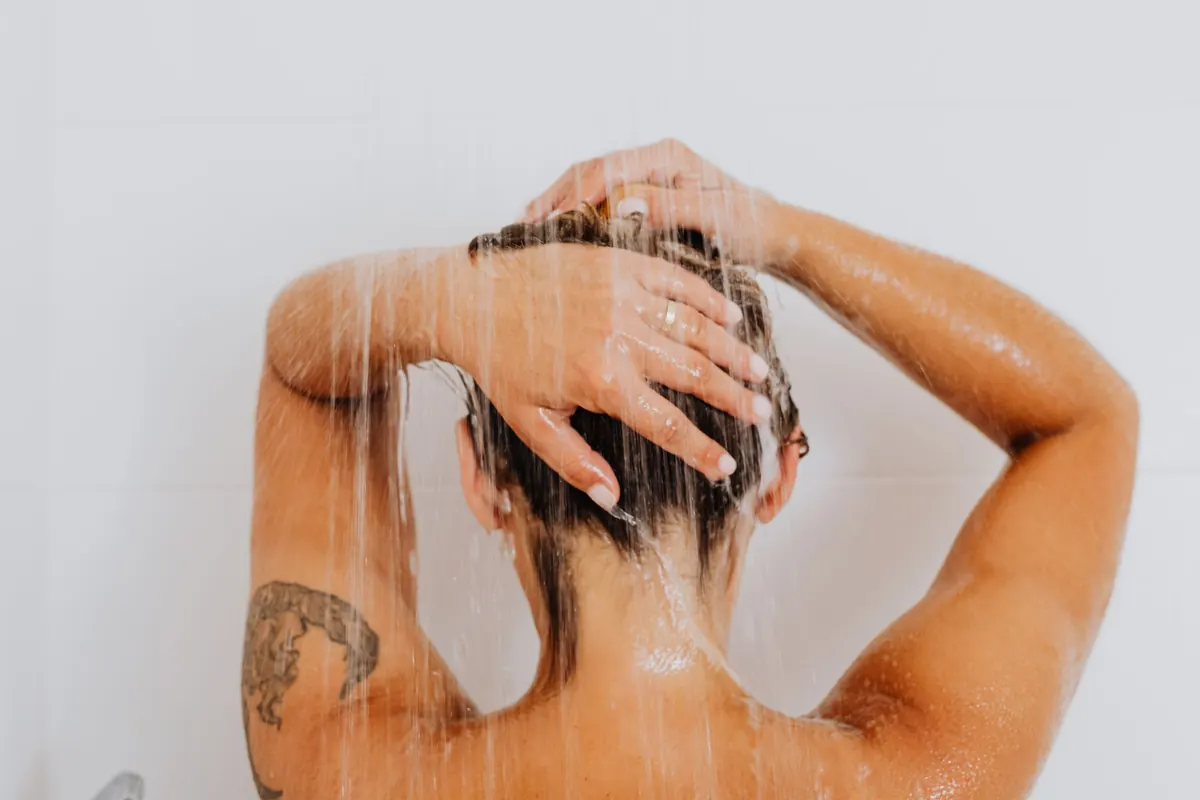
- On other wash days, use a gentle sulphate-free shampoo. Work it into the scalp rather than piling all your hair on top of your head, and let the rinse water carry it through the lengths.
- Skip the double lather. A second round does not clean better, it just dries the ends out.
- Time it sensibly. Avoid chelating on the same day as a colour service, and leave it alone if your scalp is sore, flaky or irritated.
Rinses and finishing steps that actually shift minerals
An acidic rinse is the cheapest tool in the bathroom. Mix a tablespoon of apple cider vinegar, or a small pinch of citric acid, into a litre of cool water. Pour it through after conditioning, then rinse briefly or leave it as your final step. The acid helps loosen the mineral film and smooths the cuticle, which is why hair feels silkier afterwards. Stronger is not better; neat vinegar will leave hair dry and sharp-smelling.
A final rinse with filtered or distilled water works well if your hair feels coated. A litre poured slowly over the head at the end of a shower, after everything else, is enough. Bottled distilled water is inexpensive and lasts several washes. Do not use boiled water for this. Boiling reduces the water and leaves the minerals behind, so you end up pouring a more concentrated solution over your head than the tap gave you.
Keep the temperature down, too. Hot water opens the cuticle and lifts natural oils, and minerals settle into roughened hair more readily. Lukewarm washing and a cool final rinse is a small change with a noticeable payoff.
Filters and softeners: honest expectations
Shower filters are widely misunderstood. Basic carbon cartridges reduce chlorine, sediment and some odour, which genuinely helps with colour fading and that swimming-pool smell. Most of them do not remove calcium or magnesium. If a filter claims to soften water, it needs an ion-exchange resin inside, and that resin has to be recharged or replaced regularly or it simply stops working.
A whole-house ion-exchange softener does remove hardness properly, and many people find their hair easier to manage afterwards, sometimes with less shampoo. It is a real investment, it changes the water you drink and cook with, and softened water can feel oddly slippery at first. Talk it through with an installer before committing, and check what your supplier permits if you are considering changes to the plumbing.
Everyday habits that keep buildup down
- Pat, don't rub. A microfibre towel or an old cotton T-shirt creates far less friction on hair that is already rough.
- Use a leave-in. A light leave-in conditioner or a few drops of oil on the ends seals the cuticle and makes day-two hair feel less like straw.
- Always use heat protection. Hair fighting a mineral film is already fragile, so irons and dryers do more damage than usual.
- Go easy on dry shampoo. Residue plus minerals equals dullness, and it builds up fast on a hard-water supply.
- Wet your hair before swimming. Apply a leave-in first, so your strands absorb fresh water rather than chlorinated pool water.
- Exfoliate the scalp gently every week or two to lift mineral and product film, then condition. Scratching an itch makes it worse.
Colour, toning and the brassiness problem
Lightened hair is more porous, so it soaks up minerals faster than virgin hair, and that film can oxidise into the warm, orangey tones people describe as brassiness. If you tone over a mineral layer, the result can be uneven and it fades quickly. Chelate first, tone second.
A purple or blue toning shampoo once a week helps keep blondes and cool browns in check, but it is a top-up, not a fix. If your colour is turning brassy within days of an appointment, the water is usually the culprit. Mention it to your colourist before your next visit so they can factor chelating into the plan, and avoid chelating in the fortnight after a bleach service unless they have told you otherwise.
A simple routine to keep going
You do not need all of this at once. Start with one chelating wash a week followed by a mask, add an acidic rinse on the days your hair feels coated, and keep a bottle of distilled water in the bathroom for the weeks when the supply seems worst. A gentle sulphate-free shampoo for everything in between, a microfibre towel and a leave-in will handle most of the rest.
If your scalp stays itchy, sore or flaky, or you are losing hair, that is a conversation for a professional rather than a shampoo aisle. See your GP or a dermatologist, or ask a qualified trichologist, because persistent scalp problems and shedding have causes that hard water alone does not explain.